
San Clemente’s identity is built around summer. The Pier, the beach trail, the surf breaks at T-Street and the Pier Bowl, the Thursday night concerts, the Ocean Festival in July, the Fiesta Music Festival on Avenida Del Mar in August — these are the things that make this town what it is, and they’re also the things that fill our streets, parking lots, and sidewalks with far more people than the rest of the year. If you live here full-time, you’ve probably noticed that the character of local traffic shifts noticeably between, say, a quiet Tuesday in February and a Saturday afternoon in July.
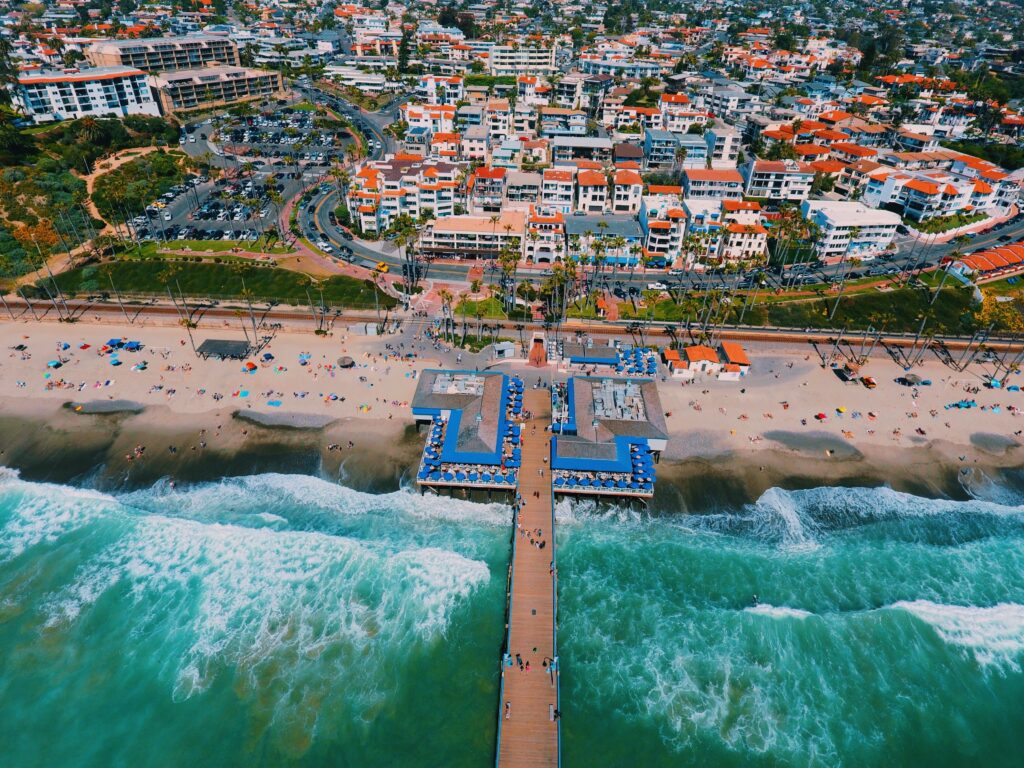
That shift isn’t just an inconvenience. It changes the kinds of accidents that happen, where they happen, and who’s involved. This post looks at how San Clemente’s summer season specifically affects accident risk — not just “more cars,” but the particular patterns that show up when a small beach town temporarily absorbs a much larger population.
More People, Different Kinds of Risk
A useful way to think about summer in San Clemente is that it doesn’t just add more cars to the road — it adds more of nearly every category of road user at once, in the same relatively small geographic footprint. More pedestrians walking to and from the beach. More cyclists and rental e-bikes on the coastal trail. More rideshare vehicles doing pickups and drop-offs near the Pier and downtown. More parked cars competing for a fixed, and genuinely limited, supply of beach-adjacent parking. And more drivers who don’t live here and aren’t familiar with the timing of local signals, the location of crosswalks, or which streets turn into one-way festival routes on a given weekend.
That combination tends to shift the accident profile away from pure freeway or open-road collisions and toward lower-speed, higher-frequency incidents: pedestrians stepping into traffic outside a crosswalk near the beach, parking lot fender-benders as visitors circle for a spot, cyclist and e-bike collisions where trail traffic meets driveways and cross streets, and rideshare pickup/drop-off conflicts where a stopped vehicle creates a hazard for the traffic behind it.
Beach Parking Pressure and What It Leads To
San Clemente’s beach-adjacent parking is limited even on an ordinary day, and the standard local advice — arrive before 8 or 9 a.m. if you want street parking, or expect to pay for a metered lot — reflects just how quickly it fills. During peak summer weekends and especially during signature events like the Ocean Festival, that pressure intensifies considerably. Drivers circle residential streets looking for an open space, sometimes for 20 or 30 minutes at a stretch, which increases the odds of low-speed collisions: backing accidents, drivers stopping abruptly when they spot an open space, and near-misses with pedestrians walking between parked cars.
This kind of congestion also pushes visitors into unfamiliar residential streets they wouldn’t otherwise drive, which raises the odds of a driver misjudging a stop sign, a narrow lane, or a blind driveway in a neighborhood they don’t know. If you live near the beach or downtown and notice a lot of out-of-town plates circling your street on a summer weekend, it’s worth being a little more cautious than usual when backing out of your own driveway.
Event Weekends Change Traffic Patterns Entirely
Signature summer events — the Ocean Festival at the Pier, the Fiesta Music Festival along Avenida Del Mar, the weekly Summer Concert Series rotating between the Pier and Linda Lane Park — don’t just add foot traffic. They frequently involve temporary street closures, shuttle services, and rerouted traffic that a lot of drivers, especially visitors, aren’t expecting.
During the Ocean Festival, for example, organizers have used San Clemente High School as an overflow parking area with shuttle service to the Pier, specifically because on-site parking can’t handle the volume. When an event like this draws thousands of visitors over a weekend, the surrounding streets — particularly the approach routes and shuttle pickup points — see a mix of pedestrians crossing outside of formal crosswalks, drivers unfamiliar with temporary signage or lane closures, and a general slowdown in traffic that increases the odds of rear-end collisions from drivers who aren’t expecting the sudden congestion.
If you’re driving anywhere near downtown or the Pier during a known event weekend, building in extra time and treating every intersection as if a pedestrian might step out unexpectedly is a reasonable precaution — and often simply unavoidable given how the traffic behaves.
Rideshare Congestion Near the Pier and Downtown
Summer weekends bring a noticeable increase in rideshare activity around the Pier, the restaurants along Avenida Del Mar, and other nightlife areas downtown. Rideshare vehicles making stops in active travel lanes — rather than pulling fully out of traffic — are a recurring contributor to rear-end collisions and near-misses, particularly after dark when a stopped vehicle with only its hazard lights on can be harder for an approaching driver to register in time.
This is compounded by the fact that many rideshare passengers are visitors who may be walking to or from a pickup point they’re unfamiliar with, sometimes crossing mid-block or between parked cars to reach a car that’s double-parked. If you’re both a driver and an occasional rideshare passenger in this area, it’s worth being deliberate about where you ask to be picked up or dropped off — a proper parking spot or designated loading zone is safer than a live travel lane, even if it means a slightly longer walk.
Cyclists, E-Bikes, and the Coast Trail During Peak Season
The Coast Highway Protected Trail and the broader beach trail system see significantly higher bicycle and e-bike traffic during the summer, driven both by residents making more use of it and by visitors renting e-bikes for the day. E-bike riders unfamiliar with the trail’s crossing points — where the path meets driveways, parking lot entrances, and cross streets — are more likely to misjudge a car’s movement or fail to anticipate a turning vehicle, and drivers making those same turns are more likely to be looking for a gap in car traffic rather than watching for a bike moving faster than a typical cyclist.
The seasonal surge in unfamiliar riders, often on rented equipment they haven’t used before, is worth keeping in mind whether you’re a driver crossing the trail or another cyclist sharing it. A little extra following distance and a full stop-and-look at every trail crossing goes a long way during these months.
Nighttime Risk After Concerts and Events
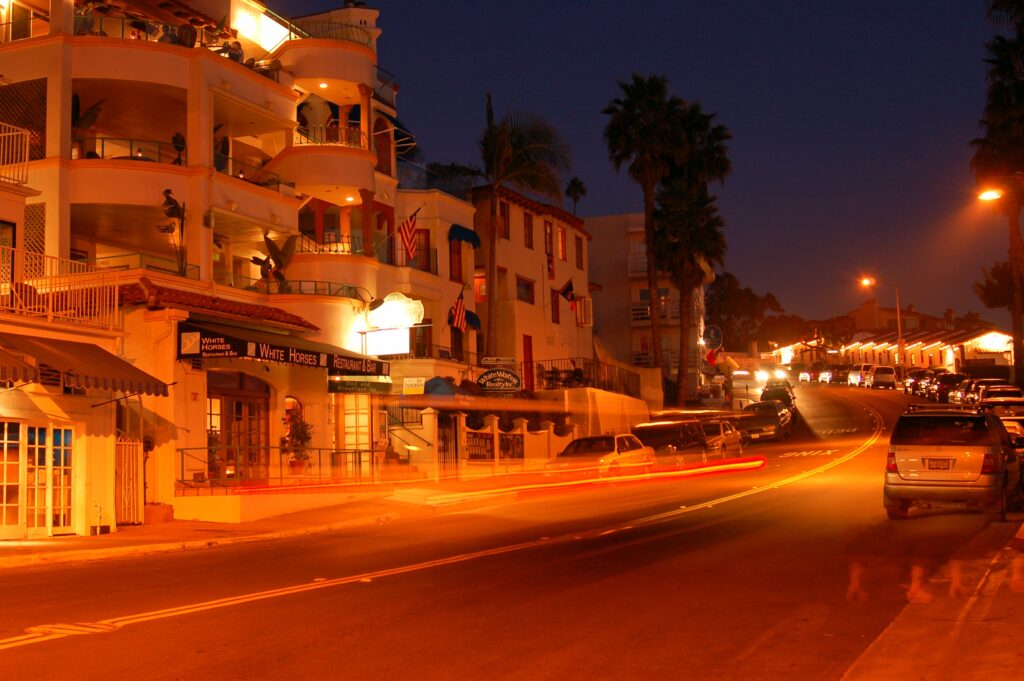
The Thursday Summer Concert Series and evening events like Island Nights bring a different kind of risk than the daytime beach crowds. As these events wind down, typically between 8 and 9 p.m., a large number of pedestrians disperse at once from the Pier and Linda Lane Park areas, many walking to cars parked several blocks away or waiting for a rideshare pickup along a street that isn’t designed to handle a sudden surge of foot traffic.
This creates two overlapping hazards. First, visibility drops as dusk turns to full dark, and pedestrians in summer clothing without reflective elements can be genuinely hard to see against a dimly lit residential street, especially for a driver who isn’t expecting a crowd to be crossing mid-block. Second, alcohol is a factor at some of these events, and impaired pedestrian judgment — misjudging a car’s speed and distance, or crossing without checking both directions — shows up more often in the hour or two after an event ends than during the event itself.
If you’re driving through downtown or near the Pier as one of these events is letting out, treating every stretch of road as a potential pedestrian crossing, not just the marked ones, is a reasonable and often necessary precaution.
What This Means Practically, for Drivers and Visitors Alike
None of this is a reason to avoid San Clemente in the summer — the town’s entire economy and identity depend on people showing up for exactly these events and beach days. But a few adjustments make sense during peak season:
- Build in extra time, especially around event weekends. If you know the Ocean Festival, Fiesta Music Festival, or a Thursday concert is happening, plan your route and timing around it rather than assuming normal traffic patterns will hold.
- Treat every crosswalk and trail crossing as active, even without a pedestrian in sight. Beach towns in summer have a higher baseline rate of jaywalking and mid-block crossing simply because of how many people are moving between parking, the beach, and downtown.
- Be patient in parking areas. A large share of summer’s minor collisions happen at low speed in parking lots and on residential streets during the search for a spot. Slowing down and expecting sudden stops from other drivers reduces this risk substantially.
- If you’re picking up or dropping off a rideshare, use a legitimate parking spot or loading zone. It’s a small habit that meaningfully reduces the odds of being rear-ended or causing a collision behind you.
The Late-Summer Transition Brings Its Own Adjustment Period
By mid-to-late August, San Clemente’s traffic pattern shifts again as families return to school routines and morning traffic starts overlapping with the tail end of summer beach trips. This transition period — roughly the two or three weeks around the start of the school year — tends to see an uptick in school-zone-adjacent incidents as drivers readjust to buses, crossing guards, and kids walking or biking to campus after a summer of comparatively open streets. It’s a smaller and shorter-lived risk window than the core of summer, but worth flagging for the same reason the rest of this post exists: traffic risk in San Clemente isn’t static throughout the year, and knowing when the pattern is about to shift again helps you adjust before an incident forces the issue.
What to Do If You’re Involved in a Summer Accident
The fundamentals don’t change with the season — check for injuries, call 911, exchange information, and seek medical evaluation even for what feels like a minor impact. But a couple of summer-specific realities are worth knowing.
Witnesses are often more plentiful, but harder to track down. A crowded beach day means more potential witnesses to a pedestrian or cyclist collision, but also more people who leave the area quickly once the moment passes. If you’re able to safely do so, get contact information from anyone who saw what happened before they move on.
Local businesses may have relevant video. Many downtown businesses and beach-adjacent lots run security cameras that could have captured an incident. Footage is often retained for only a short window, so a prompt request — sometimes best made through an attorney — can matter.
Comparative negligence applies here too. California’s rule that fault can be shared, without eliminating your ability to recover compensation, applies just as much to a summer parking lot fender-bender or a trail collision as it does to a freeway pileup. Insurance companies may try to argue that a pedestrian who crossed mid-block, or a cyclist who wasn’t watching for a turning car, bears significant responsibility — but that argument depends heavily on the specific facts of the location and the surrounding circumstances.
A Firm That Knows San Clemente’s Rhythms
Because Rosen Law Offices is based here in San Clemente, we see the same seasonal patterns our clients do — the parking crunch, the event weekends, the rideshare congestion near the Pier. That local familiarity matters when it comes to understanding how a particular summer accident happened and what evidence is likely to support a claim.
If you or someone you know has been hurt in an accident during San Clemente’s busy season — whether in a parking lot, on the beach trail, or anywhere in between — we offer free consultations to help you understand your options. Call us at (949) 335-0020.
This article is intended for general informational purposes and does not constitute legal advice. Every accident involves unique facts, and the outcome of any claim depends on the specific circumstances involved. If you’ve been injured, consult with a licensed attorney at Rosen Law Offices, APC about your particular situation.