
Nearly every post on this blog mentions comparative negligence, and for good reason. It is the rule that governs what happens when more than one person shares blame for an accident, which describes a large share of real-world crashes and injuries. It’s also one of the most misunderstood rules in personal injury law. Many people assume that if they were even partly at fault, they can’t recover anything. In California, that’s not true.
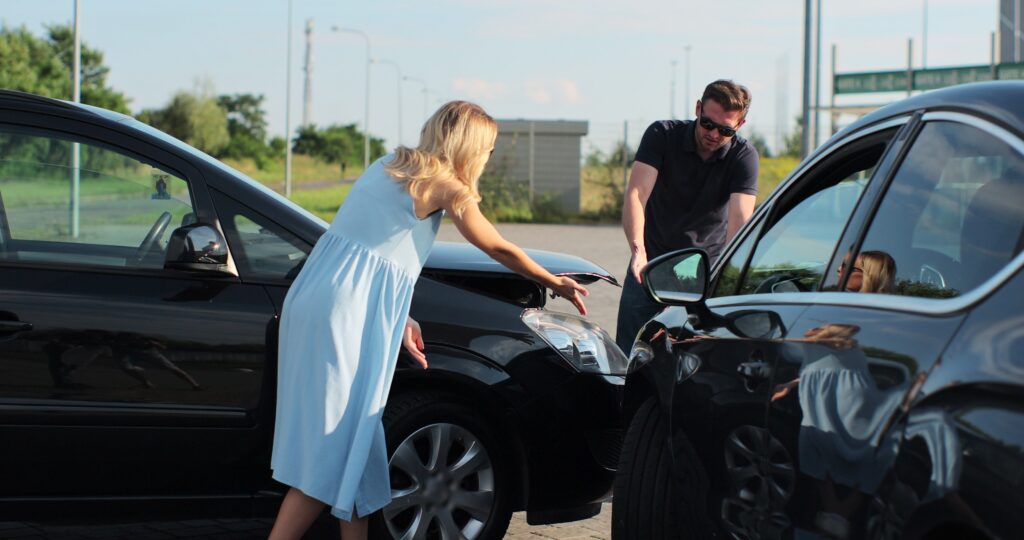
This post explains how the rule works, walks through the math with real examples, describes how fault gets divided when several people are responsible, and covers how insurers use the rule to reduce what they pay. Understanding it can change how you approach a claim, and how you respond when an insurer says you were partly to blame.
Pure Comparative Negligence: The Basic Rule
California follows a rule called pure comparative negligence, established by the California Supreme Court in Li v. Yellow Cab Co. (1975). Under this rule, an injured person’s compensation is reduced by their own percentage of fault, but it is never eliminated altogether, however large that percentage is.
Before Li, California followed the older doctrine of contributory negligence, under which even a small amount of fault by the injured person could bar recovery entirely. The California Supreme Court replaced that all-or-nothing approach with a system that assigns responsibility proportionally.
A simple example. Suppose a jury finds that your total damages are $100,000 and that you were 30% at fault for the accident. You would recover $70,000, which is $100,000 reduced by 30%.
A more extreme example. Suppose you were found 80% at fault. You’d still recover 20% of your damages. In many other states, a plaintiff who is more than 50% (or in some states 51%) at fault recovers nothing. California has no such bar, which is why the pure comparative approach is often described as the most plaintiff-friendly version of the rule.
Why This Matters Even If You Think You Were Partly to Blame
Many injured people hesitate to pursue a claim because they believe they contributed to the accident. Perhaps a pedestrian crossed mid-block. Perhaps a cyclist was outside the bike lane. Perhaps a driver was going slightly over the limit before someone pulled out in front of them. In California, those facts reduce the value of a claim but don’t end it.
That is particularly important in the situations we’ve covered on this blog. As we explained in our post on pedestrian safety near the Pier, a person crossing outside a crosswalk still has claims against a driver who failed to exercise due care. As we explained in our post on cycling the beach trail, legal exceptions often justify a cyclist’s position on the road, and even where a cyclist bears some fault, recovery isn’t barred.
How Fault Is Actually Determined
Fault percentages aren’t calculated by formula. They’re judgments about how each person’s conduct contributed to the harm, made by insurance adjusters during negotiation and by juries or judges if the case goes to trial. California’s civil jury instructions direct jurors to consider how much each person’s negligence contributed to the harm, not merely who did something wrong.
Several kinds of evidence shape the allocation.
- Traffic law violations. Speeding, running a red light, failing to yield, or violating a safety statute can support a finding of negligence. When a violation of a statute designed to protect people like the injured person caused the harm, the law may presume negligence, and we saw an example in our post on distracted driving.
- The physical evidence. Vehicle damage, skid marks, debris fields, and the positions of vehicles after the crash help reconstruct speeds and sequences of events.
- Witness accounts and video. Independent witnesses, dashcam footage, and surveillance video are often the most persuasive evidence of what actually happened.
- Signals, signage, and road design. Whether a light was green, whether a crosswalk was marked, and what the sightlines were can change how the fault is shared, as we explained in our post on left-turn accidents.
- The parties’ own statements. What someone said at the scene or to an insurer can be used to assign or reduce fault, which is one reason we recommend care with early statements, as discussed in our post on insurance adjusters.
When More Than One Person Is Responsible
Comparative negligence doesn’t just divide fault between the injured person and one defendant. In many crashes, such as the multi-vehicle pileups we discussed in our post on I-5 merge points, fault may be shared among several defendants, and the question becomes how those shares are allocated and who pays what.
California’s rule on this is nuanced and comes from Proposition 51, codified in Civil Code Section 1431.2. Under that law, each defendant is responsible for non-economic damages, such as pain and suffering, only in proportion to that defendant’s own percentage of fault. In contrast, defendants remain jointly and severally liable for economic damages, such as medical expenses and lost earnings, which means an injured person can collect the whole amount of those damages from any responsible defendant, who may then seek contribution from others.
The practical consequence is significant. If one of several responsible parties is uninsured, unidentified, or otherwise unable to pay, the injured person may not be able to recover that party’s share of the non-economic damages from anyone else. That’s part of why identifying every potentially responsible party at the outset matters so much, whether that’s an employer, a vehicle owner, a property owner, or a contractor.
Common Ways Insurers Use the Rule
Because even a small percentage of fault reduces payments, insurers routinely look for arguments that the injured person shares the blame. Some of the most common include:
- The pedestrian or cyclist “wasn’t where they were supposed to be.” Crossing outside a crosswalk, riding outside a bike lane, or riding at night without lights are all raised regularly. As we’ve discussed, many of these positions are legally permissible, and even where a rider or walker did something wrong, the driver’s duty of care still applies.
- “You could have avoided it.” Adjusters may argue that an injured person should have braked, swerved, or otherwise avoided the crash. California recognizes the sudden emergency doctrine, which says a person confronted with a sudden and unexpected peril isn’t held to the same standard as someone with time to deliberate, but the argument is still frequently made.
- Seat belts and helmets. Failing to wear a seat belt or, where required, a helmet, isn’t the cause of a crash. But a defendant may argue that the failure made injuries worse. California law treats this as something that can be considered on the question of comparative fault as a matter of fact, rather than as automatic negligence, and it typically requires medical evidence that the equipment would have prevented or reduced particular injuries.
- Failure to mitigate. The law expects injured people to take reasonable steps to limit their damages, such as following medical advice. Missing appointments or ignoring treatment recommendations can reduce recovery, a separate but related concept to comparative fault.
Children and Comparative Fault
The standard for children differs from the standard for adults. A child is generally expected to act with the care that a reasonable child of the same age, intelligence, and experience would use, and very young children may be held to little or no standard. That’s important in cases like those we discussed in our posts on back-to-school safety and pool accidents, where insurers sometimes suggest a child should have known better.
Assumption of Risk and Comparative Fault
California once treated “assumption of the risk” as a separate complete defense. Today the law distinguishes two categories. Primary assumption of risk applies where the defendant owes no duty to protect the plaintiff from inherent risks of an activity, such as the ordinary risks of contact in a sport, and in that situation there is no claim. Secondary assumption of risk, where the defendant did owe a duty but the plaintiff knowingly encountered a risk, is folded into the comparative negligence analysis and reduces recovery rather than barring it. The distinction can be decisive for recreational activities, as we noted in our post on skateboard and longboard accidents.
Comparative Fault in UM/UIM and Other Claims
The same principles apply to claims against your own insurer under uninsured or underinsured motorist coverage, since those claims turn on what you’d be legally entitled to recover from the at-fault driver, as we explain in our post on that coverage. They also apply to premises claims, product claims, and claims against public entities.
A Rule That Cuts the Other Way for Uninsured Drivers
There’s one important situation where California applies a different rule. Under Proposition 213 (Civil Code Section 3333.4), a driver who was uninsured at the time of a crash generally cannot recover non-economic damages from the other driver, whatever the percentage of fault. This is a separate rule from comparative negligence and can dramatically reduce the value of a claim, which is another reason to keep auto coverage in force.
A Worked Multi-Party Example
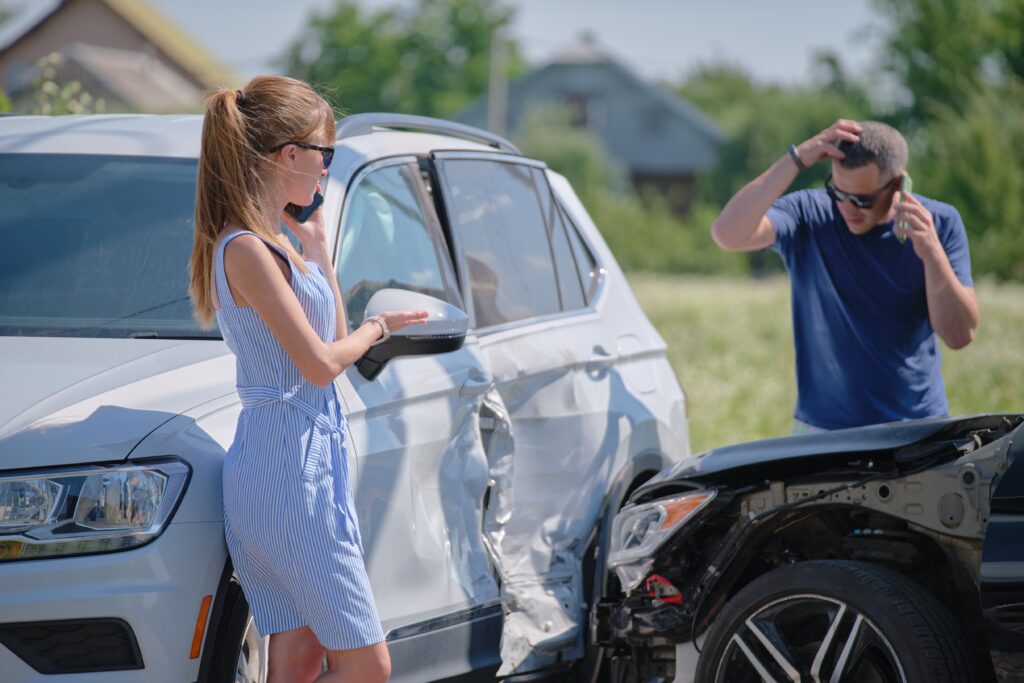
The interaction between comparative negligence and Proposition 51 is easier to see with numbers. Suppose a jury finds that your total damages are $200,000, made up of $80,000 in economic damages (medical bills and lost income) and $120,000 in non-economic damages (pain, suffering, and loss of enjoyment of life). It assigns fault as follows: 20 percent to you, 50 percent to Driver A, and 30 percent to Driver B.
Your own 20 percent reduces everything. Your economic damages become $64,000, and because economic damages are joint and several, you can collect all $64,000 from either driver, who can then seek contribution from the other. Your non-economic damages are divided by each defendant’s share of fault: Driver A owes 50 percent of $120,000, or $60,000, and Driver B owes 30 percent, or $36,000.
Now suppose Driver B has no insurance and no assets. You can’t collect B’s $36,000 non-economic share from Driver A. From Driver A you’d collect the $64,000 in economic damages plus A’s $60,000 non-economic share, for a total of $124,000. If Driver B had been insured, you’d have collected the full $160,000, which is 80 percent of your $200,000 in damages. The difference of $36,000 is the practical cost of an uncollectible defendant, and it’s exactly why identifying every responsible party, and every source of insurance, matters from the outset.
Practical Steps for Protecting Your Position
- Don’t concede fault at the scene or afterward. Apologies and speculative statements are commonly quoted later. Stick to facts and avoid characterizing who was to blame.
- Preserve evidence quickly. Photographs, video, witness contact information, and vehicle data help establish what happened before memories fade and evidence disappears.
- Challenge percentage assignments. An insurer’s initial fault position isn’t a finding, and it’s often revised when new evidence emerges.
- Get the police report, but don’t treat it as final. Reports contain an officer’s impressions and are not binding on an insurer or a jury, and they sometimes contain errors.
- Identify all potentially responsible parties. Given the way Proposition 51 works, missing a responsible party can mean losing part of the recovery.
- Be honest. An injured person who is candid about their own mistakes is more credible than one who denies the obvious, and credibility matters in every negotiation and at trial.
Fault Is Rarely All or Nothing
Most accidents involve some combination of choices, and California’s pure comparative negligence system exists so that a person who made a mistake isn’t left with nothing. If an insurer tells you that you were partly at fault, that doesn’t end the conversation. It starts a negotiation about how much, and that number is often more flexible than the first offer suggests.
If you’ve been injured in an accident in San Clemente, Dana Point, or elsewhere in South Orange County and someone is telling you it was partly your fault, Rosen Law Offices offers free consultations to help you understand how fault is likely to be evaluated in your case. Call us at (949) 335-0020.
This article is intended for general informational purposes and does not constitute legal advice. Every accident involves unique facts, and the outcome of any claim depends on the specific circumstances involved. If you’ve been injured, consult with a licensed attorney about your particular situation.