
Anyone who drives Interstate 5 through South Orange County regularly knows the pattern: traffic is moving fine, and then, without much warning, it isn’t. Brake lights appear a quarter-mile ahead, everyone slows in a chain reaction, and a few cars back someone doesn’t slow down quite fast enough. This is how the vast majority of freeway pileups happen — not through dramatic high-speed crashes, but through ordinary merging, braking, and following-distance problems that compound across several vehicles in just a few seconds.
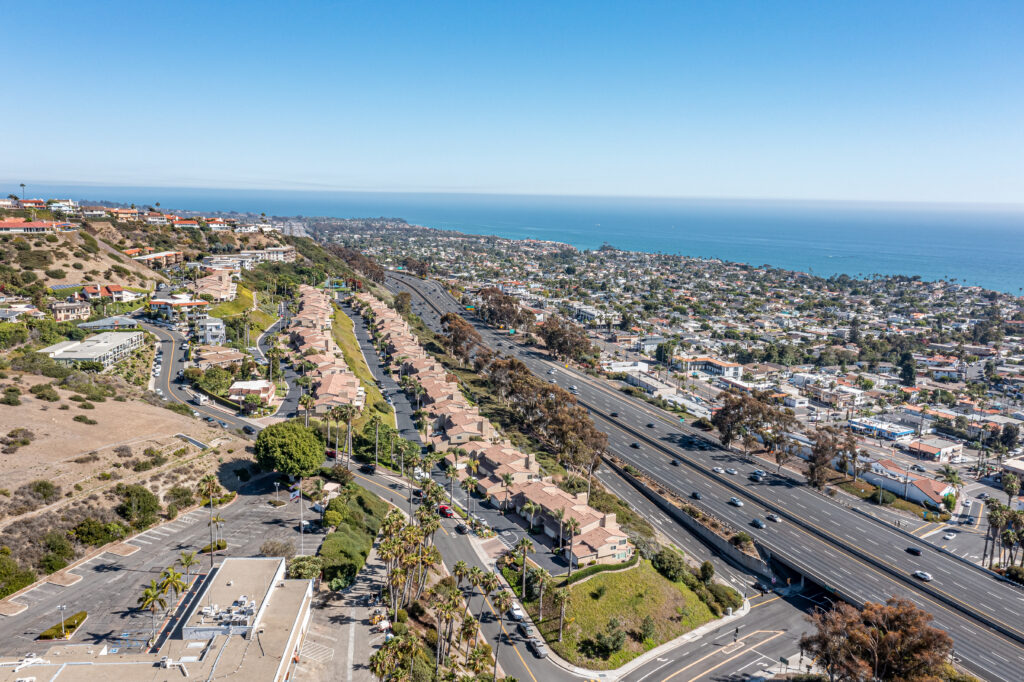
The stretch of I-5 running through San Clemente and into Dana Point has a few features that make this kind of chain-reaction crash more common than on a typical freeway segment: tight merge lanes, a permanent checkpoint that causes sudden slowdowns, and an interchange in Dana Point where several ramps converge into a single lane. This post looks at why merge points are inherently higher-risk, where the specific trouble spots are locally, and — because multi-vehicle pileups raise legal questions that single-car accidents don’t — how fault typically gets sorted out when three, four, or more vehicles are involved.
Why Merging Is the Most Dangerous Moment on a Freeway
Merging asks two vehicles to occupy overlapping space at different speeds, and it asks the driver already in the lane to notice, judge, and react to another vehicle — often within a couple of seconds. When a merge lane is short, that judgment window shrinks further. A driver entering the freeway has less room to accelerate to match traffic speed, and drivers already on the freeway have less time to see the merging vehicle and adjust.
This is compounded by what traffic engineers sometimes call the “accordion effect”: when a stretch of freeway suddenly slows — because of a merge bottleneck, a checkpoint, or a lane reduction — the slowdown doesn’t happen smoothly. Each driver reacts a fraction of a second after the driver in front of them, and that delay stacks up going backward through the line of traffic. By the time the effect reaches a car a half-mile back, a driver who was cruising at 65 mph can suddenly find themselves needing to stop almost immediately. If that driver is following too closely, distracted, or simply unlucky, a rear-end collision becomes a three- or four-car pileup within seconds.
South Orange County’s stretch of I-5 has several places where these conditions come together.
The San Clemente Border Patrol Checkpoint
One of the more unusual features of this stretch of freeway is the permanent U.S. Border Patrol checkpoint on the northbound lanes of I-5, located south of San Clemente near the San Onofre area. When the checkpoint is actively operating, traffic that has been moving at freeway speed is funneled down and slowed dramatically — sometimes to a near stop — as vehicles pass through inspection lanes. Even when the checkpoint isn’t actively stopping every car, the mere presence of slower-moving traffic and lane shifts in that area creates the same accordion effect described above.
Because this slowdown can appear with little warning, especially to drivers unfamiliar with the area, it’s a recurring location for rear-end collisions and multi-vehicle chain reactions. It has also been the site of more serious incidents, including at least one reported case of a wrong-way driver colliding with multiple vehicles near the checkpoint area. If you drive this stretch of I-5 regularly, it’s worth treating the miles leading up to the checkpoint the same way you’d treat an unexpected traffic jam — covering your brake earlier than usual and leaving extra following distance.
Avenida Pico and Cristianitos Road
Locally, the Avenida Pico interchange is one of the busiest merge points on this stretch of freeway, carrying a constant mix of commuters, freeway through-traffic, and visitors headed to the outlet mall or the beach. The volume and variety of drivers here — some very familiar with the merge, others navigating it for the first time — creates frequent rear-end and side-impact collisions as vehicles compete for position entering and exiting the freeway.
A few miles south, Cristianitos Road connects I-5 to recreational areas near the county line, and its on-ramps are noticeably short. Merging traffic here has less distance to accelerate to freeway speed before needing to blend into the flow of cars, which raises the odds of a driver misjudging the gap or a rear driver failing to notice a slower vehicle ahead of them attempting to merge.
The Camino Las Ramblas / Pacific Coast Highway Interchange in Dana Point
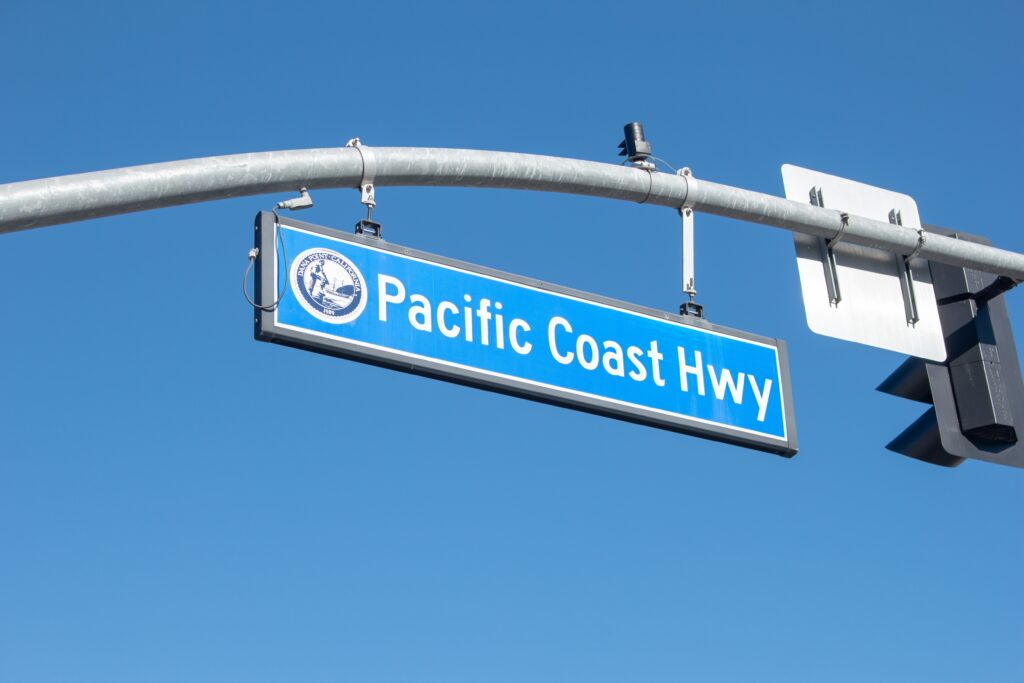
Just past San Clemente, I-5 reaches its interchange with Camino Las Ramblas and State Route 1 (Pacific Coast Highway) in Dana Point — one of the more structurally complex interchanges in South Orange County. Here, a connecting ramp from Camino Las Ramblas and a loop ramp from I-5 south both merge together to form the northbound lanes of Pacific Coast Highway, meaning traffic arriving from two different directions, at two different speeds, is asked to blend into a single roadway within a short distance.
This kind of “merge of merges” is inherently more demanding than a standard on-ramp, since drivers have to track vehicles merging in from more than one direction at once. Traffic incident logs for this stretch of freeway show a steady pattern of two-, three-, and even four-vehicle collisions clustered right around this interchange — both on the I-5 mainline approaching the exit and on the ramps themselves. If you regularly travel between San Clemente and Dana Point, this interchange deserves extra attention, particularly during the evening commute or busy weekend traffic headed to the harbor.
Other Common Triggers Worth Watching For
Beyond the specific geography of these interchanges, a few recurring conditions tend to show up in the pileup reports for this stretch of freeway.
Late-afternoon sun glare. Drivers heading northbound on I-5 in the late afternoon are often driving directly into low sun angles, particularly in the fall and winter months. Combined with a merge point or checkpoint slowdown, glare can be enough to delay a driver’s reaction by a critical second or two.
Commercial trucks in the mix. I-5 through South Orange County carries a steady volume of commercial truck traffic moving between San Diego and Los Angeles. Trucks require significantly more distance to stop than passenger vehicles, and a truck caught in a sudden slowdown near the checkpoint or the Dana Point interchange can turn what might have been a two-car rear-end into a much larger and more serious collision. When a commercial vehicle is involved in a pileup, the claim often involves an additional layer — the trucking company and its insurer — on top of the individual drivers.
Marine layer and coastal fog. South Orange County’s coastal fog, especially common in late spring and early summer, can reduce visibility on this stretch of freeway with little warning, particularly near the bluffs south of San Clemente. A merge point that’s manageable in clear conditions becomes considerably more dangerous when drivers can’t see brake lights until they’re already close.
What Makes Multi-Vehicle Pileups Legally Different
A two-car accident is usually a fairly contained question: which driver failed to exercise reasonable care, and to what degree. A pileup involving three, four, or more vehicles raises a more complicated version of the same question, because more than one driver’s actions may have contributed to the outcome — and not necessarily to the same degree.
- Fault isn’t automatically shared equally. California doesn’t default to splitting responsibility evenly among everyone involved in a chain-reaction crash. Instead, each driver’s specific conduct is evaluated separately. The driver who initiated the chain reaction by following too closely or failing to slow down in time may bear most of the responsibility, while a driver further back who was struck and pushed forward into the car ahead of them may bear little or none. Untangling this requires looking at where each vehicle made contact, in what order, and what each driver was doing in the moments before impact.
- “Rear driver at fault” is a starting presumption, not an automatic rule. California law generally presumes that a driver who rear-ends another vehicle failed to maintain a safe following distance. In a simple two-car accident, that presumption often does most of the work in establishing fault. In a multi-car pileup, though, that presumption has to be applied car by car, and it can be rebutted — for example, if a driver in the middle of the chain was pushed into the car ahead of them by the vehicle behind, they may not be the one who failed to leave adequate space.
- Multiple insurance companies get involved, and their interests don’t align. In a two-car crash, there are typically two insurers negotiating with each other. In a four-car pileup, there may be four or more, each trying to minimize its own policyholder’s share of fault — sometimes by pointing at other drivers in the chain. This can turn even a fairly clear-cut accident into a slower, more contested claims process, since no single insurer is positioned to make an early, comprehensive assessment of what happened.
- Evidence quality matters more, not less. Because fault in a pileup often comes down to precise sequencing — who braked when, who struck whom first, whether a vehicle was pushed into another rather than striking it directly — the physical evidence at the scene carries significant weight. Damage patterns, the final resting positions of the vehicles, witness accounts, and any available dashcam or nearby surveillance footage can all become important in a way they might not be in a simpler crash.
What to Do If You’re Involved in a Multi-Vehicle Accident
The basics are the same as with any collision — check for injuries, call 911, and seek medical attention even if you feel fine — but a few additional steps matter more in a pileup involving several vehicles.
- Document your position in the chain. If you’re able to safely do so, take photos not just of your own vehicle’s damage, but of where each vehicle came to rest relative to the others, and the damage patterns on the front and rear of each car. This can help later in reconstructing the sequence of impacts.
- Avoid assigning blame at the scene, including to yourself. In the immediate aftermath, it’s common for drivers to apologize reflexively or speculate about what happened, even when they aren’t in a position to know the full sequence of events. These statements can complicate a claim later, especially when there are multiple insurers looking for any opening to shift responsibility.
- Expect to hear from more than one insurance company. If several drivers were involved, you may be contacted by multiple insurers, not just the one for the driver who struck you directly. It’s reasonable to decline giving a recorded statement to any of them until you understand your own position in the accident and, ideally, have spoken with an attorney.
- Get a copy of the CHP or police report once it’s available. In multi-vehicle collisions on the freeway, California Highway Patrol typically responds and produces a report that documents the officer’s assessment of the sequence of events. This report often becomes a central piece of evidence in sorting out how fault is divided among the drivers involved.
Why Local Knowledge Matters in These Cases
Merge-related pileups tend to hinge on details that are easy to overlook if you don’t know the road: how short a particular on-ramp is, whether a checkpoint or interchange creates a foreseeable slowdown, or how a specific interchange’s ramp geometry affects merging traffic. Rosen Law Offices is based in San Clemente, and our attorneys are familiar with these specific interchanges and the accident patterns that show up here again and again.
If you’ve been involved in a multi-vehicle accident on I-5 near San Clemente or Dana Point, we offer free consultations to help you understand where you stand — including how fault is likely to be apportioned among the drivers involved and how to handle the multiple insurance companies that often get pulled into these claims. Call us at (949) 335-0020 to talk through what happened.
This article is intended for general informational purposes and does not constitute legal advice. Every accident involves unique facts, and the outcome of any claim depends on the specific circumstances involved. If you’ve been injured, consult with a licensed attorney at Rosen Law Office about your particular situation.