
San Clemente doesn’t have much in the way of late-night public transit, and that gap gets filled by rideshare — Uber and Lyft pickups and drop-offs are a routine sight around the Pier, along Avenida Del Mar’s restaurants, and during summer events like the Ocean Festival and Fiesta Music Festival, when parking is scarce and a lot of visitors would rather not drive after a full day in the sun. Rideshare has also become a common way to connect from the Metrolink station to somewhere further from downtown. All of that means a meaningful share of the accidents South Orange County residents deal with now involve a rideshare vehicle in some capacity — as a driver, a passenger, or the other car involved.
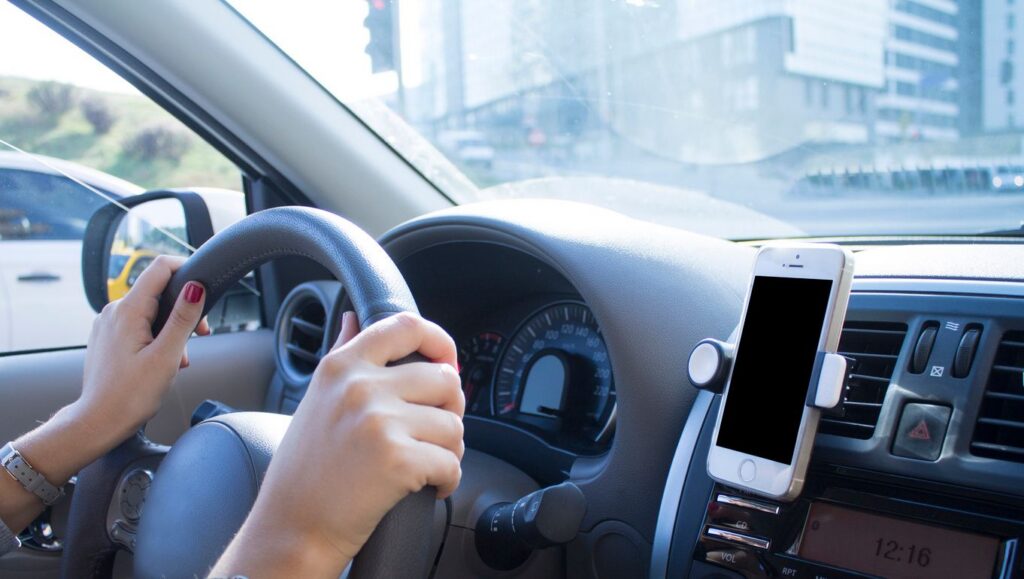
Liability in these cases is more layered than a typical two-car accident, because a rideshare driver’s insurance coverage actually changes depending on what the app was doing at the moment of the crash. This post breaks down how that works, walks through a significant 2026 change to California law that affects passengers specifically, and covers what to do if you’re involved in a rideshare accident in any capacity.
Why Rideshare Insurance Isn’t a Single Policy
A rideshare driver isn’t covered by one continuous insurance policy the way a taxi or delivery driver typically is. Instead, California law recognizes several distinct “periods” of a rideshare driver’s shift, and the applicable insurance coverage — and which company’s policy responds — depends entirely on which period the driver was in at the moment of the collision.
- Period 0: App off. When a driver hasn’t logged into the Uber or Lyft app at all, they’re just a private driver in their own car. Only their personal auto insurance policy applies, at whatever limits they’ve purchased — which, if they carry only California’s state minimum, can be fairly modest.
- Period 1: App on, waiting for a ride request. Once a driver logs into the app and is available to accept rides but hasn’t been matched with a passenger yet, a lower tier of contingent coverage from the rideshare company kicks in — generally $50,000 per person and $100,000 per accident in bodily injury coverage, plus $25,000 in property damage. This coverage is typically “contingent,” meaning it applies on top of the driver’s personal policy, filling gaps the personal policy doesn’t cover, rather than replacing it outright. This is also the period where disputes sometimes arise over exactly when a driver went from “off” to “available,” since app activity logs — not the driver’s own account — are usually what settle the question.
- Periods 2 and 3: Trip accepted through drop-off. From the moment a driver accepts a ride request and begins heading to the pickup location, through the entire trip until the passenger is dropped off, both Uber and Lyft are required to provide a substantially larger commercial liability policy — $1 million in third-party liability coverage per incident. This is the coverage most people picture when they think of rideshare’s “$1 million policy,” and it applies to injuries the rideshare driver causes to their passenger, to occupants of another vehicle, or to pedestrians and cyclists.
A Significant 2026 Change: Reduced Uninsured Motorist Coverage for Passengers
For years, California also required Uber and Lyft to carry $1 million in uninsured/underinsured motorist (UM/UIM) coverage during Periods 2 and 3 — meaning that if a passenger was injured by a separate, at-fault driver who carried little or no insurance, the rideshare company’s policy would step in to cover the gap.
That changed with Senate Bill 371, which took effect for California rideshare insurance policies issued or renewed on or after October 1, 2025. Under the new law, the required UM/UIM coverage for rideshare passengers during Periods 2 and 3 dropped from $1 million to $60,000 per person and $300,000 per incident — roughly a 94% reduction. It’s important to understand exactly what this change does and doesn’t affect: if the rideshare driver themselves causes the accident, the $1 million liability policy is untouched. The reduction specifically applies to the layer of coverage that protects a passenger when a different, underinsured driver causes the crash.
Practically, this means a rideshare passenger injured by an uninsured or seriously underinsured third-party driver has meaningfully less financial protection available through the rideshare company than they would have had before October 2025. If you use rideshare regularly, this is a good reason to review your own auto policy’s uninsured/underinsured motorist coverage — even if you don’t own a car, some personal auto or umbrella policies can extend UM/UIM protection to you as a passenger in someone else’s vehicle, and that gap is now considerably more relevant than it used to be.
Who Can Be Held Responsible, and Who Can’t
Uber and Lyft classify their drivers as independent contractors rather than employees, a status reinforced by Proposition 22. That classification limits, but doesn’t eliminate, the rideshare companies’ potential liability. In practice, responsibility in these cases tends to break down as follows:
The rideshare driver is responsible for their own negligent driving, just as any driver would be, and their conduct is what typically triggers the relevant insurance coverage for whichever period they were in.
The rideshare company generally isn’t held liable under a standard “employer is responsible for employee” theory, given the independent contractor classification. However, direct claims against Uber or Lyft remain possible in more limited circumstances — for example, claims based on negligent hiring or retention of a driver with a known dangerous history, or safety failures tied to the company’s own policies and practices, rather than simply the driver’s momentary negligence.
A third-party driver who causes an accident involving a rideshare vehicle is liable the same way they would be in any other collision, and their own auto insurance is the first place a claim would typically be directed — with the rideshare company’s UM/UIM coverage potentially supplementing it for an injured passenger, subject to the reduced limits described above.
Practical Challenges Specific to Rideshare Claims
Proving which period applies isn’t always straightforward from the scene of the accident. Whether a driver was in Period 1 or Period 2 — meaning whether the lower contingent coverage or the $1 million commercial policy applies — depends on the driver’s app status at the exact moment of the crash. That information lives in Uber’s or Lyft’s internal records: timestamps for when the driver went online, when a ride was accepted, when pickup occurred. These companies maintain this data but don’t share it voluntarily, and it can be a point of dispute in a claim, especially if a driver insists they had just accepted a ride when the coverage picture says otherwise. A prompt written request to preserve this data — sent as early as possible after an accident — helps prevent disputes over what the app actually showed at the time.
Multiple parties and insurers often means a slower process. A rideshare accident can involve the driver’s personal insurer, the rideshare company’s commercial insurer, and potentially a third-party driver’s insurer, all at once. Each has its own interest in minimizing what it pays, and coordinating between them takes more time than a standard two-party claim.
Passengers have a claim path that doesn’t depend on who caused the crash. If you’re injured as a rideshare passenger, you generally don’t need to prove your driver was at fault to have a viable claim — the $1 million commercial liability coverage during Periods 2 and 3 is designed to cover injuries to passengers regardless of which driver (yours or another vehicle’s) caused the collision, subject to the usual comparative fault analysis if more than one party contributed.
A Related but Different Case: Food Delivery Drivers
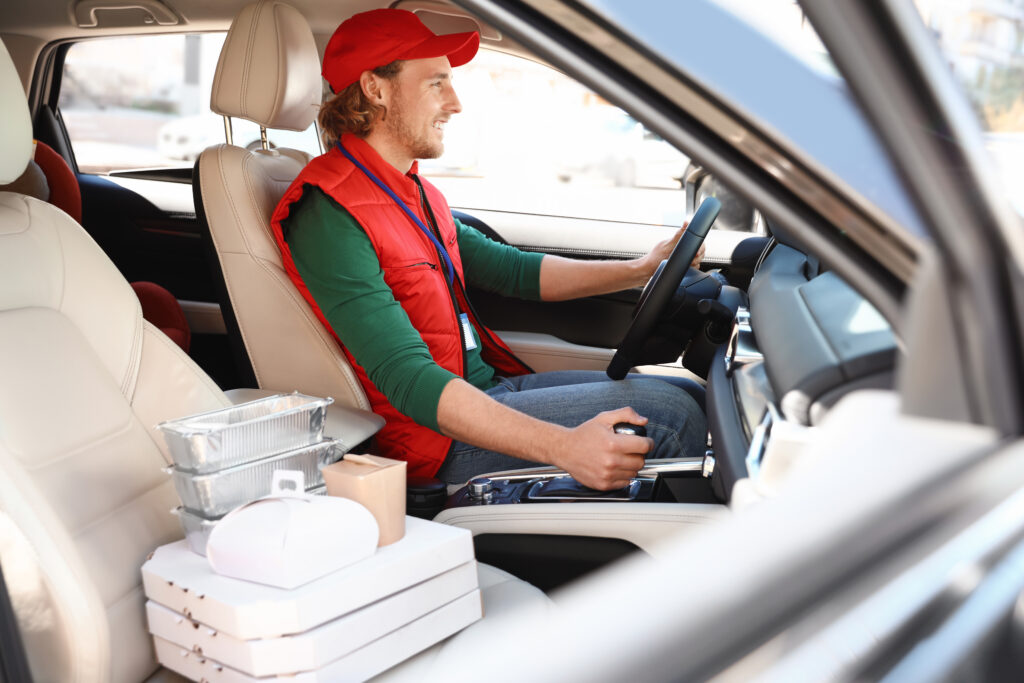
San Clemente and Dana Point also see plenty of DoorDash, Uber Eats, and Instacart drivers, and it’s worth knowing that food delivery liability, while structurally similar to rideshare, isn’t identical. Delivery network companies generally follow a comparable period-based insurance structure — lesser contingent coverage while a driver is logged in and waiting for an order, and a larger commercial policy once an order is accepted and being delivered. However, the specific coverage amounts, and how clearly a given company discloses them, vary more between delivery platforms than they do between Uber and Lyft, which are more tightly aligned due to shared California regulatory requirements.
If you’re hit by a delivery driver, or you’re a delivery driver involved in an accident, the same basic approach applies: determine and document the driver’s app status at the time of the crash, since it will govern which insurance layer responds, and don’t assume the coverage will mirror what applies to a typical rideshare trip.
What to Do If You’re in a Rideshare Accident
- As a passenger: Seek medical attention, and before leaving the scene, take a screenshot of your trip details in the app — driver name, timestamp, and route — since this becomes relevant evidence for determining which coverage period applied. Report the accident within the app as well as to the police.
- As a rideshare driver: Note your app status at the time of the crash (logged in, en route, or on an active trip) and preserve that information, since it will determine which layer of insurance responds. Report the accident to both your personal insurer and the rideshare company promptly — failing to disclose rideshare activity to your personal insurer can sometimes create coverage disputes of its own.
- As a third-party driver, cyclist, or pedestrian hit by a rideshare vehicle: Treat it procedurally like any other accident — get the driver’s information, note that they were driving for Uber or Lyft, and take a photo of their app screen if it’s visible and you’re able to safely do so, since it can help establish their status at the time.
In all cases, California’s two-year statute of limitations for personal injury claims applies to rideshare accidents just as it does to any other car accident, so it’s worth acting with reasonable promptness even if you’re not sure yet whether you want to pursue a claim.
How Rideshare Claims Get Handled Differently by Insurers
Because rideshare accidents involve larger commercial policies than a typical personal auto claim, they tend to draw more scrutiny from insurance adjusters, not less. It’s common for the commercial insurer behind the $1 million liability policy to investigate more thoroughly, and sometimes more aggressively, than a standard personal auto insurer would for a comparable claim — precisely because the potential payout is larger. This can show up as requests for extensive documentation, delays while the insurer verifies the driver’s exact app status at the time of the crash, or an early settlement offer designed to resolve the claim before the full extent of an injury is known.
It’s also worth knowing that both Uber and Lyft maintain internal safety and claims departments that operate somewhat separately from their commercial insurers, and complaints about how a driver or claim was handled can, in some circumstances, also be raised with the California Public Utilities Commission, which regulates transportation network companies in the state. This additional layer of oversight doesn’t replace the standard insurance claims process, but it’s a resource that doesn’t exist in a typical two-car accident.
Local Familiarity Matters Here Too
Rideshare accidents involve more moving legal parts than a standard two-car crash, and the specific facts — which period applied, what data the app shows, how many insurers are involved — matter a great deal. Rosen Law Offices is based in San Clemente and regularly handles these layered claims for residents and visitors throughout South Orange County.
If you’ve been hurt in a rideshare accident — as a passenger, a driver, or someone hit by one — we offer free consultations to help you understand which coverage applies to your situation and what your options are. Call us at (949) 335-0020.
This article is intended for general informational purposes and does not constitute legal advice. Every accident involves unique facts, and the outcome of any claim depends on the specific circumstances involved. If you’ve been injured, consult with a licensed attorney about your particular situation.